en
 العربية
Technical Analysis for professional traders
Technical Analysis for professional traders
Unlock exclusive trading videos and eductional content by logging in or creating an account
Frequently Asked Questions
What separates professional technical analysis from beginner analysis?
A false breakout is a move beyond a level that fails and returns to the prior range. It can result from insufficient follow-through, liquidity changes, news or stop orders; it is not proof that a participant deliberately created the move.
What is multi-timeframe analysis and why does it matter?
“Stop hunt” is a trader’s description of a move through an area where stops may be clustered, followed by a reversal. The move may reflect ordinary liquidity and order-flow dynamics; intention cannot be established from the chart alone.
What does confluence mean in trading?
Waiting for a close, retest or supporting price activity may reduce false-break risk, but none eliminates it. Stops should be placed at logical invalidation levels and sized for the instrument’s volatility. Around news, spreads and slippage can increase.
How many indicators should a professional trader use?
There is no fixed number, but most experienced traders keep it minimal to avoid conflicting signals and analysis paralysis. Many rely mainly on price action and structure, adding one or two complementary tools such as a moving average or momentum oscillator. The goal is a clear, repeatable read of the market rather than a crowded chart that produces contradictory messages.
Why is discipline more important than the strategy itself?
Entering immediately at a level, placing stops at obvious clusters, over-leveraging, ignoring higher-timeframe context and trading illiquid conditions can increase trap risk. These factors do not prove that a stop hunt occurred. Use defined risk and realistic execution assumptions.
Does technical analysis work on leveraged CFDs?
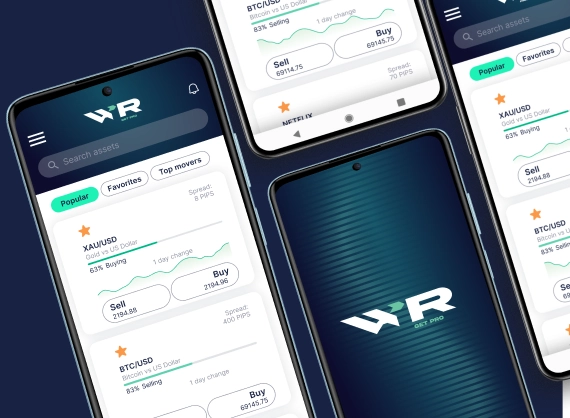
The same charting principles apply whether you trade shares, forex, or CFDs, since you are analysing price behaviour. On the WrPro platform many markets are offered as CFDs, which are leveraged, so both profits and losses are magnified relative to your deposit. Good technical analysis can inform entries and exits, but tight risk control matters even more when leverage is involved.